President’s Message: Building community
A goal of any volunteer-driven organization is to support the community in which you live. This month, I’m highlighting several events that celebrate the vibrant and resilient community we call home.
The first is an event this week organized by Julia Duvall, who currently serves as secretary of PRSA WNC.
This Friday, Aug. 28, the chapter is celebrating 828 Day and its seventh anniversary with Driving Connections, a special event focused on maximizing small business opportunities during next month's PGA Biltmore Championship.
In partnership with the Buncombe County Strategic Coalition, the event brings together business leaders, community organizations, and communications professionals to share practical public relations and marketing strategies, explore collaborative partnerships, and discuss ways to attract visitors before, during, and after the tournament.
Julia and Shane Ryden, chapter board members from Western Carolina University, will facilitate the workshop, focusing on storytelling, brand visibility, earned media opportunities, and long-term relationship building to help participants turn a major regional event into lasting business growth.
Next week, we're hosting a virtual program on Thursday, Sept. 3, with Angi Daus, Vice President of Air Service and Corporate Communications at Asheville Regional Airport. Discover how the airport is moving "AVL Forward" with its comprehensive, multi-year modernization and expansion project. We'll also get an inside look at how her PR team is supporting the airport's monumental construction project, near-record setting passenger utilization in 2025, and rebranding while the region continues to recover from Tropical Storm Helene.
Lastly, AIGA Asheville is inviting PRSA members to Branding for Baseball - an inside look at the transformation of both the legendary Asheville Tourists baseball brand and HomeTrust Park with Team President Brian DeWine on Monday, Sept. 28. Explore how the Asheville Tourists turned a $40 million ballpark renovation into a cohesive brand experience while networking with local designers.
I hope to see you at one or more of these exciting events supporting each other and this community!
Playback- Online Lunch and Learn: Leadership in Communication- A talkback with Dr. Carla White
This presentation explores how employees interpret leadership communication and how dialogic communication practices shape employee engagement, perceptions of organizational support, and psychological safety in the workplace.
President’s Message: Get Involved
I was reading a recent thread in the PRSA leadership forums about the lack of networking events among local chapters. Some commenters voiced disappointment over a lack of social events at their respective chapters, and others discussed the good old, pre-COVID days, when there was more budget and seemingly more desire to gather in person more frequently. Eventually, as the conversation evolved, some questioned whether the national PRSA office might be partially to blame for this shift.
Reading the dialogue, I found myself agreeing with some of the comments but disagreeing with others. One statement stuck with me most as the volunteer president of this chapter:
"National doesn't create community. Chapters do. National enables community."
Simplistic as that is, it's at the heart of the issue. The PRSA National office may play some role in low participation at the chapter level, but I also doubt anyone would credit it for an active, vibrant chapter — that comes down to local leaders. I've been privileged to work with some talented, dedicated ones during my time on this board, and I challenge you to consider what difference you can make here, in Western North Carolina. Have an idea? Let's hear it. Have a complaint? Help us find a solution. We want you to get involved!
At the end of the year, we'll nominate a new group of leaders to take up the mantle of the board — I encourage you to consider a position. There are several ways you can participate, and we need all of them. Start by checking out our board positions and consider how you'd like to be involved. Over the next month, the nominating committee will be working on recommendations for the 2027 slate, and it'd be great to have more volunteers step up. Email us at connect@prsawnc.org to nominate yourself or a colleague, or to just learn more about a role.
I, for one, am grateful for the community we're building. I hope you are too.
President’s Message: Creating Meaningful Member Engagement
As we close out the first half of 2026, I wanted to take a moment to reflect on what we've accomplished together — and get you excited about what's ahead.
One of our chapter goals this year is to provide at least six meaningful ways for members to actively engage with PRSA WNC. I'm pleased to share that we've already hosted 10 events this year — a mix of virtual programming, in-person professional development, and social meetups designed to connect our community across Western North Carolina. Whether you've been a regular face at our gatherings or are still looking for your first opportunity to plug in, there's truly something here for everyone.
And we're just getting started. Visitprsawnc.org to see what's coming up and mark your calendar — I'd love to see you there.
On a personal note, I recently signed up to be a PRSA New Member Navigator, and I want to tell you about this exciting national initiative. PRSA is piloting a program that pairs experienced members (5+ years) with first-year members to help them find their footing and get the most out of their membership. Navigators aren't mentors or coaches — they're friendly guides who offer a warm welcome and point newer members toward the resources, events, and connections that make PRSA valuable.
With membership churn a real challenge across the profession, this kind of peer support can make a genuine difference. If you're an experienced PRSA member and want to give back in a meaningful way, I'd encourage you to consider signing up. Email navigator@prsa.org to learn more or volunteer.
Here's to a strong second half of the year — together.
AI in PR and Communications with Robert Manning (online resources)
Digital transformation and AI strategy leader Robert Manning joined us to discuss one of the most important—and rapidly evolving—topics in our profession: the role of artificial intelligence in public relations and communications. Robert shared his extensive experience across global brands and innovative organizations to guide us through AI’s impact on public relations and communications.
About Robert Manning
Robert Manning is a digital transformation executive and AI strategist with 15+ years of global leadership across Fortune 500 and high-growth companies. He specializes in helping organizations use AI to modernize brand engagement, improve operations, and drive measurable business results.
As Director of AI Transformation at Dematic, he leads enterprise initiatives embedding AI across marketing, communications, and workflows. He also advises organizations through CommonSensing AI, guiding strategy, governance, and change management to turn fragmented pilots into scalable programs.
Previously, at Cochlear, Manning led digital and AI strategy across North America, advancing generative AI adoption to boost marketing performance, customer engagement, and productivity. He developed enterprise roadmaps, led vendor selection, and launched training programs to accelerate adoption.
His earlier roles at Medtronic Diabetes, Coca-Cola, Johnson & Johnson Vision Care, and Citigroup focused on large-scale digital transformation and building data-driven marketing ecosystems.
A sought-after speaker, Manning delivers practical insights on scaling AI responsibly while balancing innovation, governance, and execution.
Meet a WNC Member: Betty Farmer, Ph.D.
This is the second in a series of Q & A interviews with members of the PRSA WNC Chapter.
Betty Farmer, Ph.D., is an award-winning professor of communication at Western Carolina University where she taught courses ranging from communication fundamentals to advanced courses in public relations and crisis communication.
A PRSA member since 1993, Farmer launched WCU’s PRSSA chapter in 1995, grew the chapter to 40+ members, and gained national recognition for the chapter and its members.
After 33 years at WCU, Farmer announced her retirement at the end of the Spring 2026 semester. She will continue working as an expert in organizational communication, leadership, and emotional intelligence through her consultancy, Farmer Communications.
Following her retirement, Farmer shared some thoughts on her career, future opportunities for students and professionals and more.
Q: When you reflect on 33 years, what moments stand out as defining your career? What accomplishments are you most proud of, in the classroom and/or in your consulting work?
A: My pedagogical commitment to service-learning and community engagement is one of the defining features of my career. I’ve helped students build their skills by working on real-world projects with clients/community partners. This has required students to exhibit professional attitudes and behaviors and to produce entry-level professional quality deliverables. For examples, my students were heavily involved in the five-year Dillsboro Revitalization project, which I led as special assistant to the chancellor for Dillsboro. Students helped promote and organize numerous events, including the annual Lights & Luminaries festival, created the Dillsboro Dish newsletter using WordPress, collaborated to build a Dillsboro mobile web app, and provided social media training for Dillsboro merchants, among other projects. To help build PRSA WNC in its early years, student teams organized a regional interest meet-up, conducted research to build potential membership lists, organized a professional-student mentoring “speed-dating” event in Asheville, and produced promotional materials such as a brochure, member profiles and videos, and a new website mockup. Through these community engagement projects, students learned valuable lessons about teamwork and collaboration, lead time and deadlines, editing and client approvals, and, most importantly, why getting out of your comfort zone is necessary for growth.
Q: What do you hope your students carry with them long after leaving your classroom?
A: So many things, but I’ll highlight three. First, I hope they recognize that communication is foundational to both personal and professional success. Effective communication makes both relationships and organizations hum. Second, ethics matter. I want them to always operate with integrity, speak truth to power, and do the right thing. Always. Third, I want them to never stop learning. Never. Currency in professional knowledge and skills is critical. Success depends on professional currency.
Q: Can you share a story of a student who left a lasting impression on you?
A: There are so many students. That is akin to asking someone to name their favorite child. What has made my career so fulfilling is to see so many students grow both in competence and in confidence. I’m always impressed by the students who are open to constructive feedback, who are willing to work to a high standard, and who become proud of the work they produce. For example, one student recently said, “I didn’t realize how proud I would feel” completing this project. When students feel pride and satisfaction in their work, those are the moments that make me most proud.
Q: How has the field changed, and what skills do you think are most critical for today’s communication professionals?
A: In some ways, the field has changed dramatically, especially as it relates to technology. AI clearly is a game changer, and communication and public relations professionals must learn how to “orchestrate” AI, as AI expert Robert Manning says. In other ways, what was important 40 years ago, such as building trusting relationships with a wide variety of stakeholders, is still important today. It may be harder to build trust today, but the need to build trusting relationships through communication remains foundational to what we do.
Q: What qualities define a strong communicator and leader today?
A: Adaptability and agility are key. I’m a strong proponent of situational theory of leadership. There is no one single way to be a great leader. The best leaders adapt to the needs of the situation and the knowledge and skills of those they are leading. There are times when we must be more directive. Times when we must be bold, courageous, and take risks. And times when we need to show compassion and support. The challenge is knowing what is needed when. I also believe strong leaders separate “signal from noise,” and prioritize and focus. Strong leaders know that every time you say “yes” to one thing, you, by default, are saying “no” to something else. This requires incredible focus and discipline and the ability to communicate strategically.
Q: What advice would you give to emerging leaders entering the field?
A: I would tell them to do these three things:
Focus on building mutually beneficial relationships both internally and externally.
Learn as much as you can about AI and other technology that is changing how we work.
Prioritize emotional intelligence as an increasingly important competency—especially in the age of AI—both for themselves and their team members.
President’s Message: Building Momentum in May
May always feels like a turning point in the year — the days are longer, the mountains are in bloom, and the tempo of activity picks up. You may be feeling that same momentum in your professional life. I’ve also felt it in the life of this chapter. And with this transition comes a flurry of new chapter opportunities.
Earlier this month, we set a record for attendance at our AI in Public Relations webinar. Materials from our session with Robert Manning are available online. As a community of thoughtful communicators, navigating emerging tools like AI is exactly the kind of challenge we're here to explore together.
Moving into summer, I encourage you to check out upcoming programming and connection opportunities on our website. Our regional directors are organizing meet-ups across the region — from Boone to Hendersonville and everywhere in between. These are low-key, low-pressure ways to get face time with peers who understand your work. There truly is no wrong way to show up. There are also some interesting professional development opportunities in the works, so stay tuned for more details!
If you've been on the sidelines this year, consider this your invitation to step in. Reach out to me, a board member, or one of our regional directors. We're here, and we'd love to hear from you.
President’s Message: Appreciating Accreditation
During the pandemic, I found myself at a professional crossroads. I really enjoyed my work, but often felt I was out of my depth when dealing with various communications decisions related to the crisis. I spent a significant amount of time scouring the web for answers and found two things to be true: 1) No one was truly prepared for dealing with these types of communication issues; and 2) The resources that I found to be the closest thing to answers were generally through PRSA.
I reached out to Betty Farmer, whom I had gotten to know through some Crisis Comms certification classes, for advice. She recommended I look into pursuing an APR (Accreditation in Public Relations) and told me that a PRSA chapter was forming in Western North Carolina. That seemingly simple suggestion ultimately led to a change in my confidence as a communicator and possibly the trajectory of my professional life.
Fast forward a couple of years, and I'm on the board of directors for the Western North Carolina Chapter of PRSA - the same chapter Betty had told me about. I decided to learn more about the APR, and an informational call with Chapter President Molly McGowan Gorsuch (who you will learn more about, below) got me a bit more excited about the challenge of pursuing accreditation so I signed up!
Over the course of the next year, I went back to school on some long-forgotten communication principles and had two wonderful mentors, both of whom challenged and encouraged me. The panel presentation was the most intimidating part of this process. The actual test was harder than I expected, though that probably said more about my own anxiety than it does about the test itself. However, it’s true that the preparation was the most educational part of the process for me. I never would have done it without knowing those milestones lay before me.
In May, I will have practiced a full year with my APR and I’m really glad I pursued it. I now have a valuable framework and knowledge that I wish I had during the pandemic, or Hurricane Helene, for that matter. I would not say that my work has completely transformed due to the APR process, but I can say unequivocally that it is better. I also created a new network of colleagues and have even served on some APR presentation panels myself.
April is APR month, and our chapter will be hosting a virtual conversation with some practitioners who have gone through the process (myself included). If you haven’t gone through that process, I’d encourage you to join the conversation.
The credential might not be for everyone, but you never know until you learn more about it. I’m truly grateful to Betty for urging me to pursue this track.
Meet a WNC Member: Molly McGowan Gorsuch, APR
This is the first in a series of Q & A interviews with members of the PRSA WNC Chapter.
A past chapter president, Molly McGowan Gorsuch, APR, is the strategic partnerships manager for the North Carolina Department of Public Instruction (NCDPI), and advocacy & outreach coordinator for the Henderson County Early Childhood Taskforce.
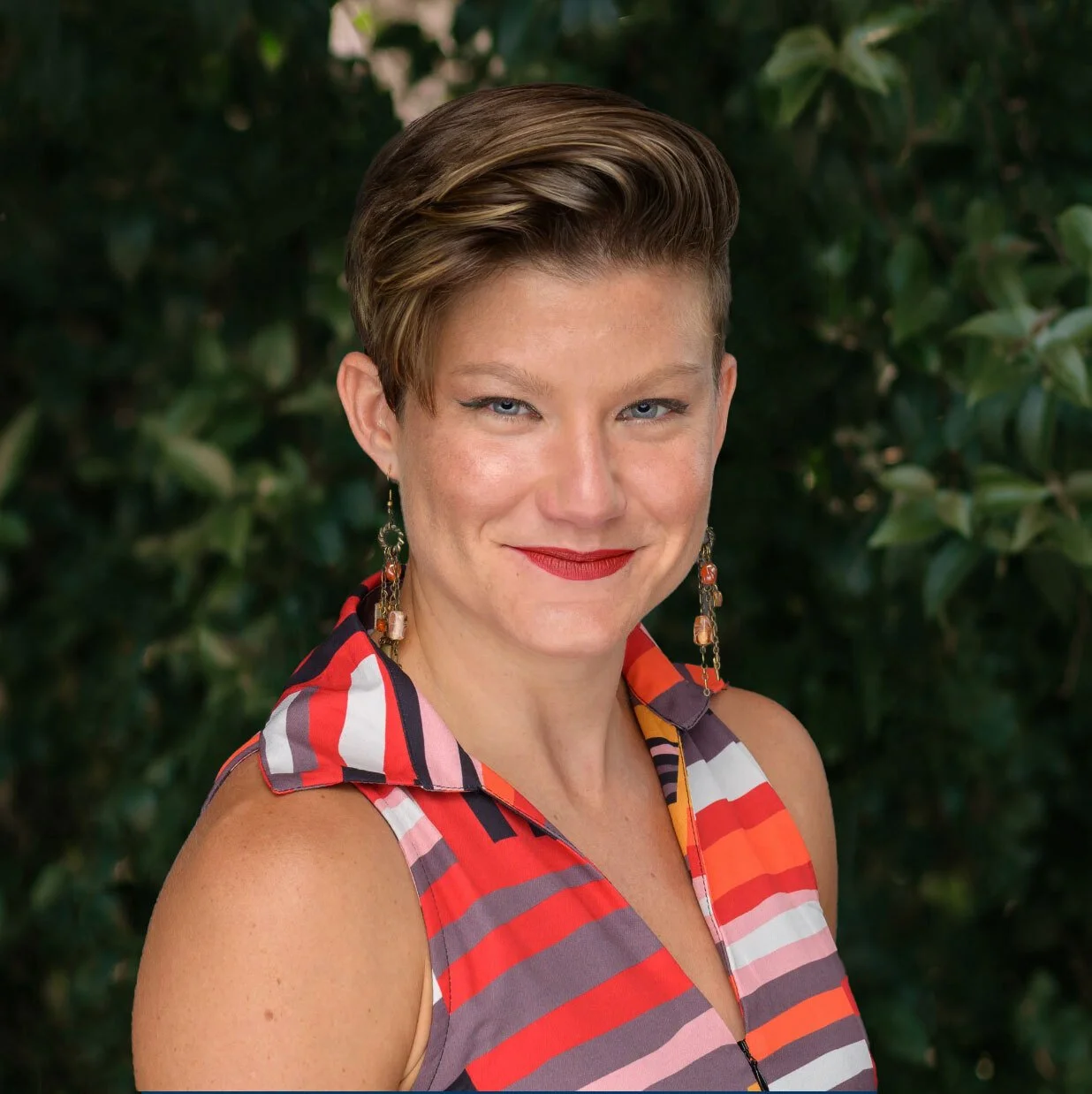
This is the first in a series of Q & A interviews with members of the PRSA WNC Chapter.
What’s one communications habit everyone should develop regardless of their job?
Listen to your people. And I don’t mean passively; be proactive about it. Depending on your job, that could be your fellow employees, or your customers, patients, voters, community members, legislators. Whatever your role, you have audiences to whom you should listen.
Put yourself in their shoes to anticipate questions or hangups they might have, seek out their perspective, and create communications and supports that address these. By creating feedback loops, you’re not only meeting the needs of your constituents - whether internal or external - you’re establishing a healthy culture and using qualitative data to optimize the work you do!
What’s the fastest lesson PR ever taught you?
People crave information and demand immediacy – but in the end, accuracy is most important. While PIO for the local school system, when we were in the midst of a public health emergency, a school lockdown, or some other crisis, it was often painful to have to hold off telling the worried parents and staff everything we might know at the time. You have empathy for your audiences and can see and hear their fear of the unknown – but sharing information before it’s verified and having to retract it later enrages the audiences you’re trying to mollify, and damages public trust. They thought they wanted the answers now. What they really wanted was to wait until you had the RIGHT answers.
What kind of stories do you love telling most?
I love a good profile or testimonial. It probably goes back to my roots as a feature reporter (and before that, a creative writing English major), but I enjoy finding and elevating those personal stories that drive home a key message. The human experience resonates with all, and making these connections for audiences brings me joy.
What advice would you give to someone pursuing their APR?
I recommend creating your ideal timeline, then work backwards before “starting the clock” (a.k.a. completing the application). Be mindful that the process is comparable to earning your master’s degree, so if you have a major life event (ie. getting married or having a baby) consider the bandwidth you’re able to devote to it.
Once you submit the application you have one year to complete the process, so I recommend applying when you are close to being ready for your panel presentation (meaning you’ve already started studying and building your project).
Studying for the APR is very much an individual, self-led process and everyone studies differently – so everyone’s path looks a little different. But the important building blocks are the same:
Free APR Study Guide (get this thing bound, you’ll be flipping through it nonstop)
A few good books (Cutlip & Center, Strategies & Tactics)
A mentor + support network (APRs, colleagues going thru the process)
Know who you are and what your study hangups are. Procrastinator? Thrive under pressure? Need to actually block time on the family and work calendars for studying? (That last one’s me.)
My journey? I’m A-type, I like structure, I love crossing things off lists, and I have anxiety. So here’s what worked for me:
I started studying 5 months before ever submitting the application (“starting the ticking clock”). I spent 2 months familiarizing myself with the Study Guide, then 3 months in the Spring cohort of the APR Prep Online Study Course (which I’d also highly recommend).
Keep in mind – I built an aggressive timeline (the words of my dear APR mentor, Cindy Warner, APR), but I had a specific end date in mind so I could be pinned at the next National School Public Relations Association seminar. Was it intense, and did I spend a lot of weekends studying? Yes. But it was doable!
A past chapter president, Molly McGowan Gorsuch, APR, is the strategic partnerships manager for the North Carolina Department of Public Instruction (NCDPI), and advocacy & outreach coordinator for the Henderson County Early Childhood Taskforce.
President’s Message: Making Connections
It All Begins Here
The warm weather we’ve had these last two weeks makes it hard to reconcile with a very frosty start to February!
One of the things that I have valued most about my time in PRSA is the connection with other professionals throughout Western North Carolina and beyond. From wise sages to those who accidentally fallen into the field of communications and PR, the pool of practitioners in this area is deep and wide.
Earlier this month, thanks to an invite of a new chapter member (Shout out to you, Paulina), I found myself sitting in on the “WNC PIO Quarterly Meeting.” This was a hybrid meeting of very capable public information officers and communicators from several different counties, and it served as a sort of “safe space” to share ideas, make or take suggestions, and even to a little back-of-the-napkin debriefing of recent events. It was a great place to be among people with shared struggles.
As the meeting progressed, I was struck by just how vast the talent is in this area. We are really lucky! I was also reminded of how important it is to be surrounded by colleagues, even (or maybe especially) ones in different areas of work. We are all better by that shared knowledge and experience.
That is one major value we hope that this chapter can bring to our members. I know, I know-- it’s hard to make time for that among employer and family demands, and “networking is hard.” That’s where we come in. We have four regional directors-at-large who can help you figure out ways to connect and find options that match your comfort level, even for those of us who aren’t raging extroverts.
They are:
Jacob Puckett - Eastern Counties/Boone Region
Molly Justice - Greater Asheville Region
Benjamin Rickert - Southern Counties/Hendersonville/Brevard Region
Shane Ryden - Western Counties/Cullowhee Region
Reach out to them- they’d love to meet you.
In the meantime, our chapter is growing. We’ve had four new members so far in 2026- not bad! From what I’ve seen, they are all impressive in their own right, and I bet they’d be really happy to know you too.
Want to get started on networking? It just so happens that Molly Justice, the director at large for the greater Asheville area is hosting a happy hour event at White Labs Brewing on Thursday, 2/26 at 5:30. We’d love to see you there, even if it’s just to stop by on your way home- you won’t be disappointed.
President’s Message: Kicking off 2026
It All Begins Here
Happy January!
I'm excited to kick off 2026 as president of PRSA WNC! You can expect a monthly email from us during the last week of each month throughout the year.
In December, our board held a virtual retreat to have frank discussions about where we are as a chapter and to cast a vision for the coming year. These discussions identified three areas of focus:
Membership and Outreach: We believe our organization's purpose is to cultivate a supportive community of professionals who network and support each other.
Programming: Our jobs are challenging, and we value opportunities to grow and learn. We have a wealth of talent and knowledge in our chapter (...that means YOU) and through our PRSA networks. We can bring value to our members by tapping into that for programming.
Communication: We need to consistently share opportunities, celebrate successes, and keep our community connected.
In our January board meeting, we agreed to focus on the goals and objectives outlined below. We're sharing these publicly for transparency and accountability, and so you can come alongside us in meeting them.
This is a small volunteer board with jobs, families, and busy lives—which means we do this because we believe in the value PRSA brings to our professional lives and our region. But we can't do it alone. Whether you're brand new to this chapter, have been observing from afar, or were once active and took a well-deserved step back—now's the time to get involved.
I hope you participate in some way this year, even if it's small. We are better because you are part of it, and we need your voice and your talents.
Best,
Tanner Pickett, MPA, APR
━━━━━━━━━━━━━━━━━━━━━━━━━━━━━━━━━━━━━━━━
2026 GOALS & OBJECTIVES
Goal 1 - Membership/Outreach
Create a growing, engaged, and involved community of public relations professionals.
Objectives: By the end of the year, we will
Increase membership by 10%
Contact all new members (new and renewals) within a month of renewal
Provide at least 6 ways for members to actively participate in the chapter
Goal 2 - Programming
Provide relevant and valuable professional development centered on the needs of our region's members.
Objectives:
Establish two target outreach initiatives focused on student chapters, young professionals, underrepresented groups, and other state/nearby related organizations to broaden the diversity of the membership base.
By February 16, 2026, distribute a survey to all current paying members for interests/needs, and ask for completion by March 2, 2026.
Host 4 events in 2026, in person or virtual, that provide professional development opportunities in specific areas as identified by the member survey (e.g., digital and social media, AI, crisis communication, demonstrating reputational value to senior leaders).
Host at least 2 regional meetings in each region in 2026.
Goal 3 - Communication
Provide consistent, reliable communication about chapter news, events, and opportunities.
Objectives:
Send 12 chapter emails in 2026
Open an Instagram account in 2026